
Circuit Analysis Lecture 25: Resonant Circuits
In the conclusion of our circuit analysis series, we dive into resonant circuits to answer the question: what does resonance mean? We find out that, when we have specific values of capacitors and inductors, we get a very characteristic response that can be useful to us. If you have any questions, please leave them in…
Circuit Analysis Lecture 24: Bandpass and Higher Order Filters
In this video we expand our knowledge of filters to include the bandpass filter. We also look at what happens if we combine two filters to create a single, higher order filter. This video relies less on math and more on an intuitive understanding of the underlying mechanisms, but it is still very important! If…
Circuit Analysis Lecture 23: Low and High Pass Filters
In this video we look at a major application of AC circuits: filters. We introduce the concept of low and high pass filters, then derive the exact interactions of the circuit. We also introduce the concept of a logarithmic scale and decibels, which are very important for many AC circuits. If you have any questions,…
Circuit Analysis Lecture 22: AC Power Examples
In this video we look at 6 examples of AC power in circuits. The first 3 examples are simple conceptual calculations, and the final 3 are actual circuits that you may see. Working out these examples ensures that you have a good, intuitive understanding of AC power, and understand what is happening in these circuits.…
Circuit Analysis Lecture 21: AC Power
In this video we get an intuitive understanding of AC power. AC power, like many other values in the frequency domain, is complex. Having an intuitive understanding of AC power makes applying the necessary equations much easier and gives you the tools you need to ensure you are analyzing your circuits correctly. If you have…
Circuit Analysis Lecture 20: Simulating AC Circuits with LTSpice
In this video I show you how to implement a simple AC circuit in LTSpice. We first look at a method we already know: transient analysis, and show that it has some shortcomings in AC circuits. Then, I show you the AC Analysis simulation command that allows you to determine the response of a circuit…

Circuit Analysis Lecture 19: AC Circuit Analysis Examples
In this video we do 10 example questions on AC circuit analysis. We first do 5 conceptual questions that don’t involve much math, then move on to 5 circuits that we solve entirely. Working with these complex number is difficult, so a calculator is very handy to have! If you have any questions, please leave…
Circuit Analysis Lecture 18: Impedance
In this video we introduce the concept of impedance. Impedance is how we will relate voltage and current in the frequency domain for AC circuits (think of it like Ohm’s Law for the frequency domain). Impedance allows us to solve AC circuits using the strategies we have explained before in DC circuits, and gives us…
Circuit Analysis Lecture 17: AC Circuits and Phasors
In this video we introduce a new concept: AC circuits. AC circuits have a voltage and current that vary with time (hence the name alternating current). We discuss the vocabulary associated with AC circuits, and introduce a new mathematical tool that will help us in the future, the phasor. We conclude by showing some waveforms…
Circuit Analysis Lecture 16: DC Capacitor and Inductor Circuit Examples
In this video we go over 5 examples of solving DC circuits with capacitors and inductors. Each circuit will have either a capacitor or inductor, as well as a switch that opens or closes at a certain time. I do not have any answers in front of me, so you will see me work these…
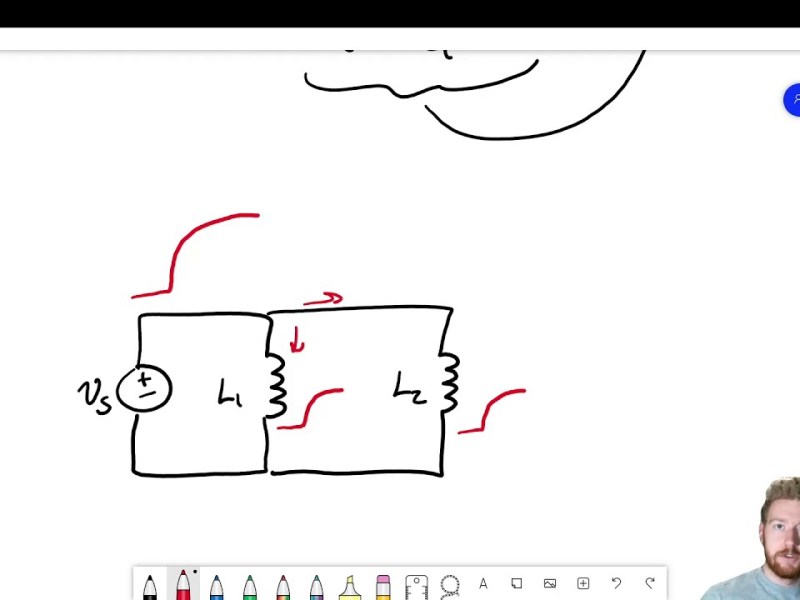
Circuit Analysis Lecture 15: Combinations of Capacitors and Inductors
In this video we look at parallel and series combinations of capacitors and inductors. Knowing how to find equivalent capacitances and inductances can make solving more complex circuits easier and lets us gain more insight into our circuits. If you have any questions, please leave them in the comments here or on YouTube, and I…

Circuit Analysis Lecture 14: Simulating DC Capacitive and Inductive Circuits
In this video we break out LTSpice to see how we can simulate DC capacitive and inductive circuits. The biggest takeaway from this video is how to model a switch, as well as how to fix common simulation errors. We also check out the thought question from last video, where I give you the answer…

Circuit Analysis Lecture 13: Inductors and DC Inductive Circuits
In this video we learn about inductors and how they behave in DC circuits. Inductors are similar to capacitors, but have some key differences that are critical to know. After this video, we are able to intuitively understand how inductors behave in DC circuits. If you have any questions, please leave them in the comments…
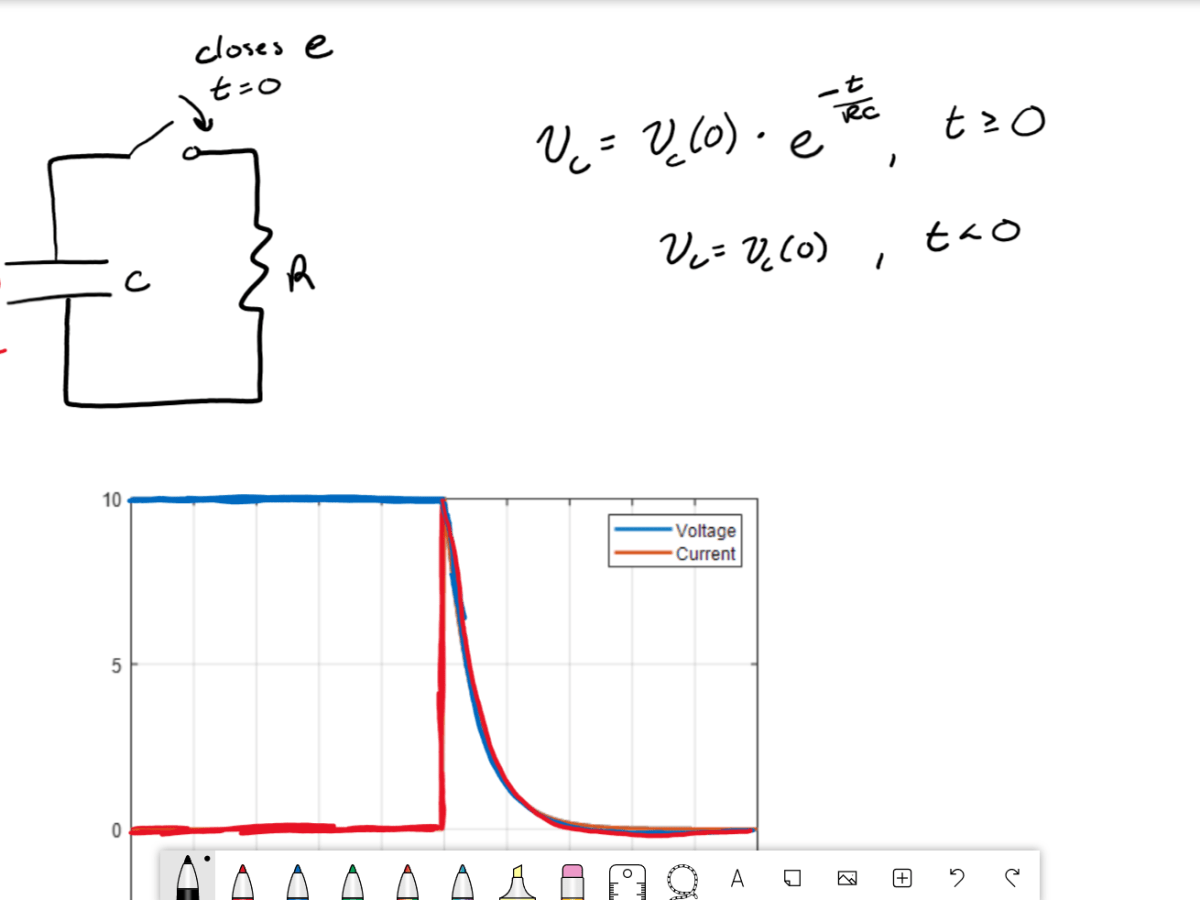
Circuit Analysis Lecture 12: DC Capacitive Circuits
Now that we have an intuitive understanding of capacitors, we can look at how they behave in DC circuits. In this video we determine the voltage across a capacitor and the effect of resistance and capacitance on the capacitor’s time response. If you have any questions, please leave them in the comments here or on…
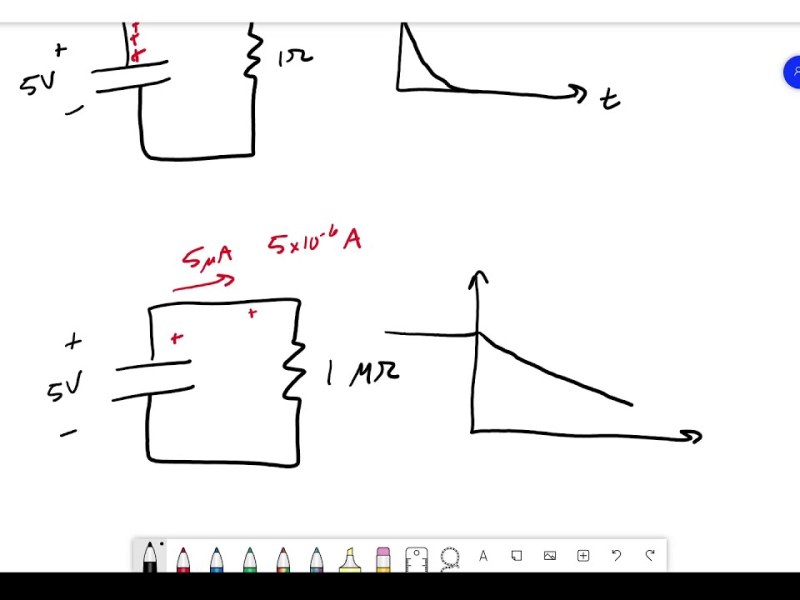
Circuit Analysis Lecture 11: Capacitors
In this lecture we take a broad look at capacitors, one of the fundamental electronic components. Before we look at the specifics of capacitors, the concepts required are presented in a simple, intuitive manner. Once we have a fundamental understanding of capacitors and capacitance, we are ready for more numerical examples. If you have any…
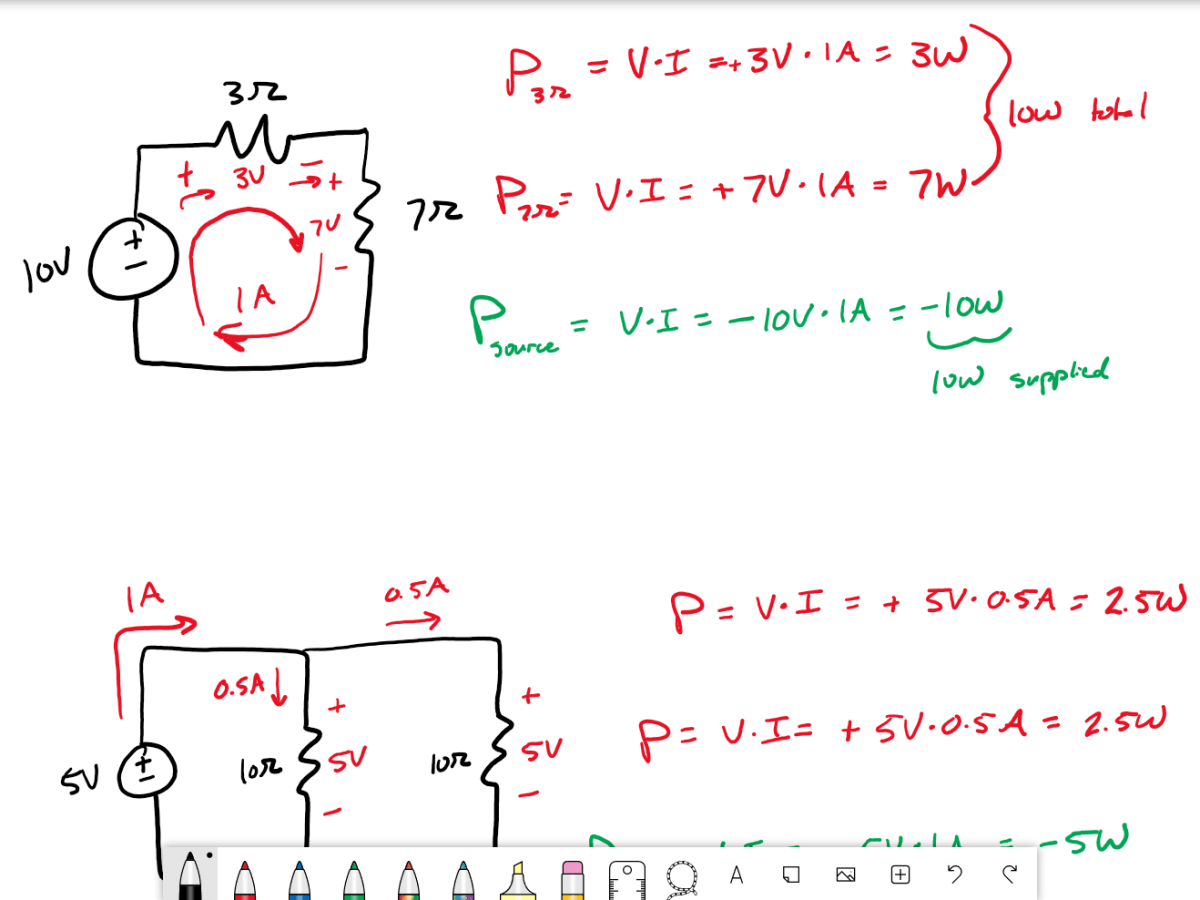
Circuit Analysis Lecture 10: DC Power
In this video we discuss in more detail a quantity we have largely ignored: power. Power is especially important since many component limits are defined in terms of power, and power will dictate the energy required to run a circuit. If you have any questions, please leave them in the comments here or on YouTube,…
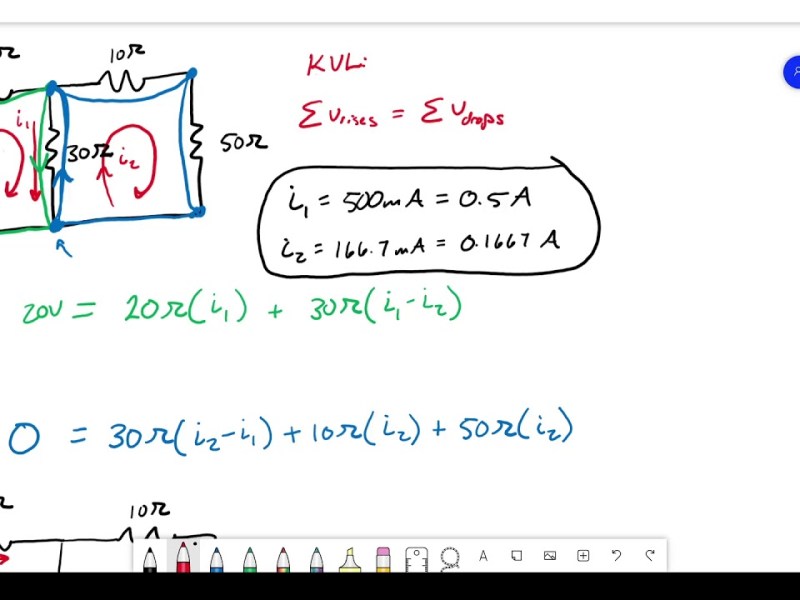
Circuit Analysis Lecture 9: Mesh Current Method
In this video we look at another powerful method to analyze circuits: the mesh current method. This method is similar to the node voltage method, with some small differences. Typically people will prefer one method over the other, but they are both powerful and useful to know. If you have any questions, please leave them…
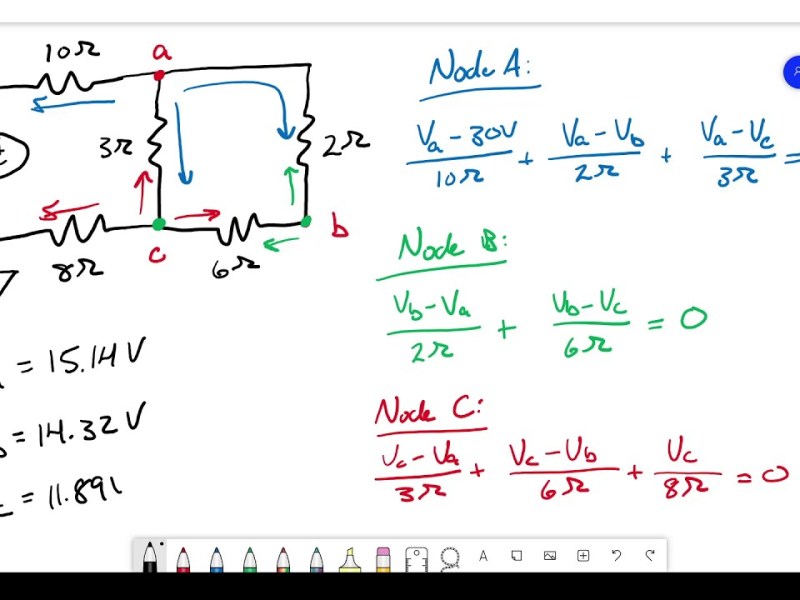
Circuit Analysis Lecture 8: Node Voltage Method
In this video we discuss a very powerful and robust analysis technique: the node voltage method. This method allows you to solve circuits that are very complex, and is what the simulation software we discussed previously uses to solve circuits. If you have any questions, please leave them in the comments here or on YouTube,…
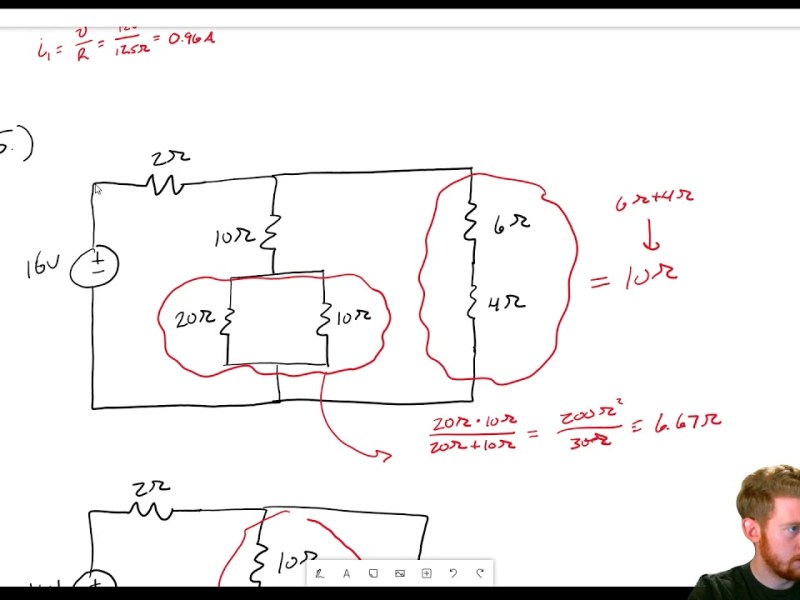
Circuit Analysis Lecture 7: Circuit Simulation Software
In this video we take a break from working out circuits by hand and figure out how to simulate them using LTSpice. LTSpice is a fast, free tool that allows you to simulate almost any circuit you would want. Simulating your circuits allows you to confirm your calculations and discover any mistakes you made before…

Circuit Analysis Lecture 6: Resistive Circuit Analysis Examples
In this video, we apply what we learn to 5 different examples. For each example, I take you through step-by-step how to solve the circuit using what we have learned so far. (Note: I don’t have the answers in front of me. You are watching me approach these problems with no idea what the answers…

Circuit Analysis Lecture 5: Parallel Resistors
In this video we look at another basic combination of resistors. We will first derive and justify the equations that we will use, then try an example using our new, simplified rule. After this, we look at a slightly more complex circuit, and find that even the most complex of circuits can be simplified using…
Circuit Analysis Lecture 4: Series Resistors
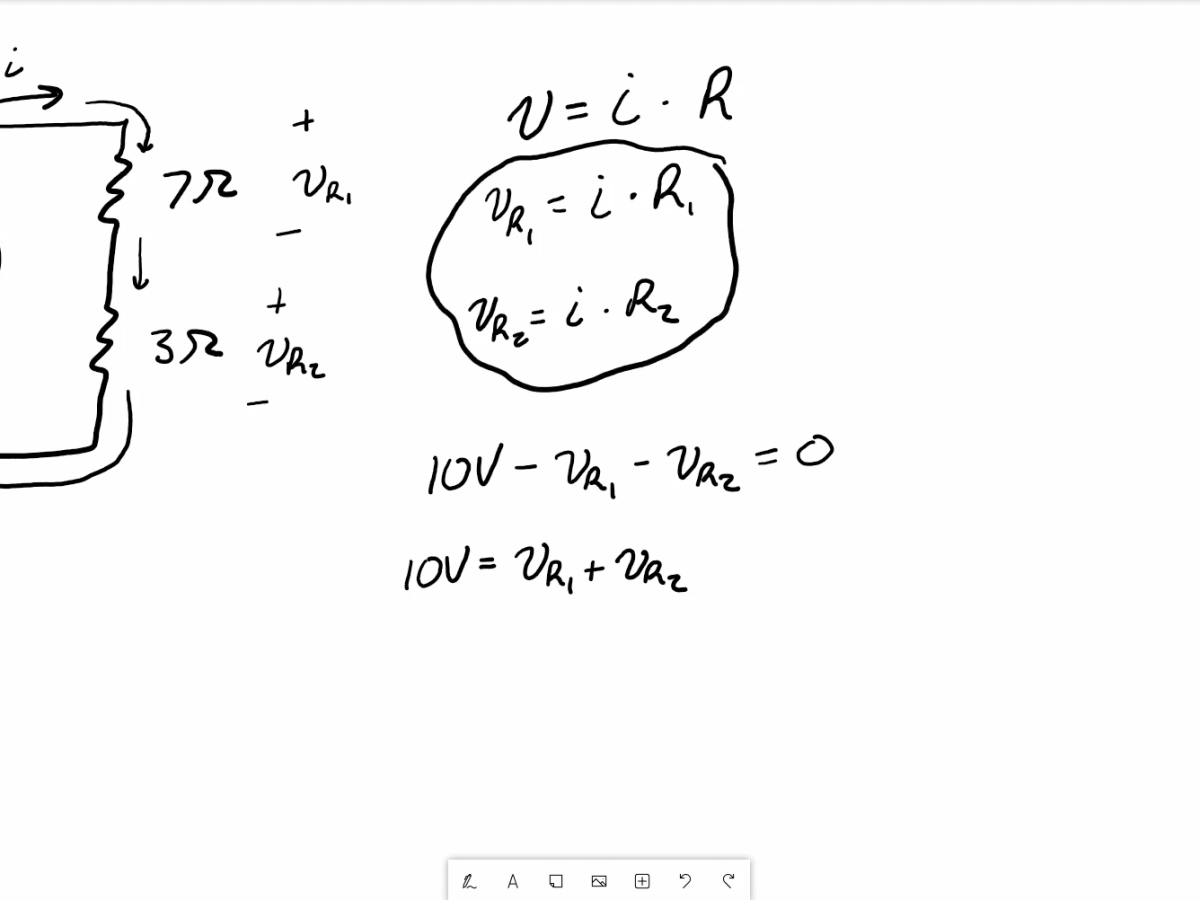
In this video we look at a basic combination of resistors. What we aim to do is create a general set of rules which will help us analyze more complicated circuits later on. We look at a simple example of 2 resistors in series, then apply the rule we derived to a more complicated example.…
Circuit Analysis Lecture 3: Kirchoff’s Laws
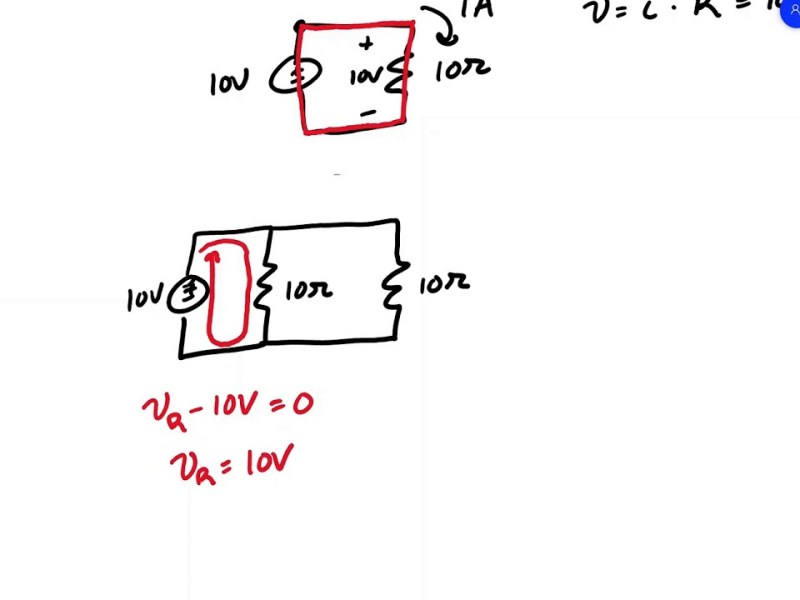
In this video, we go over Kirchoff’s Voltage, Current, and Power Laws. These laws place necessary restrictions on circuits, and ensure that our answers are correct. These laws are the basis upon which we will derive the more complicated methods of circuit analysis, so I encourage you to get a deep understanding of these laws!…
Circuit Analysis Lecture 2: Resistors and Ohm’s Law
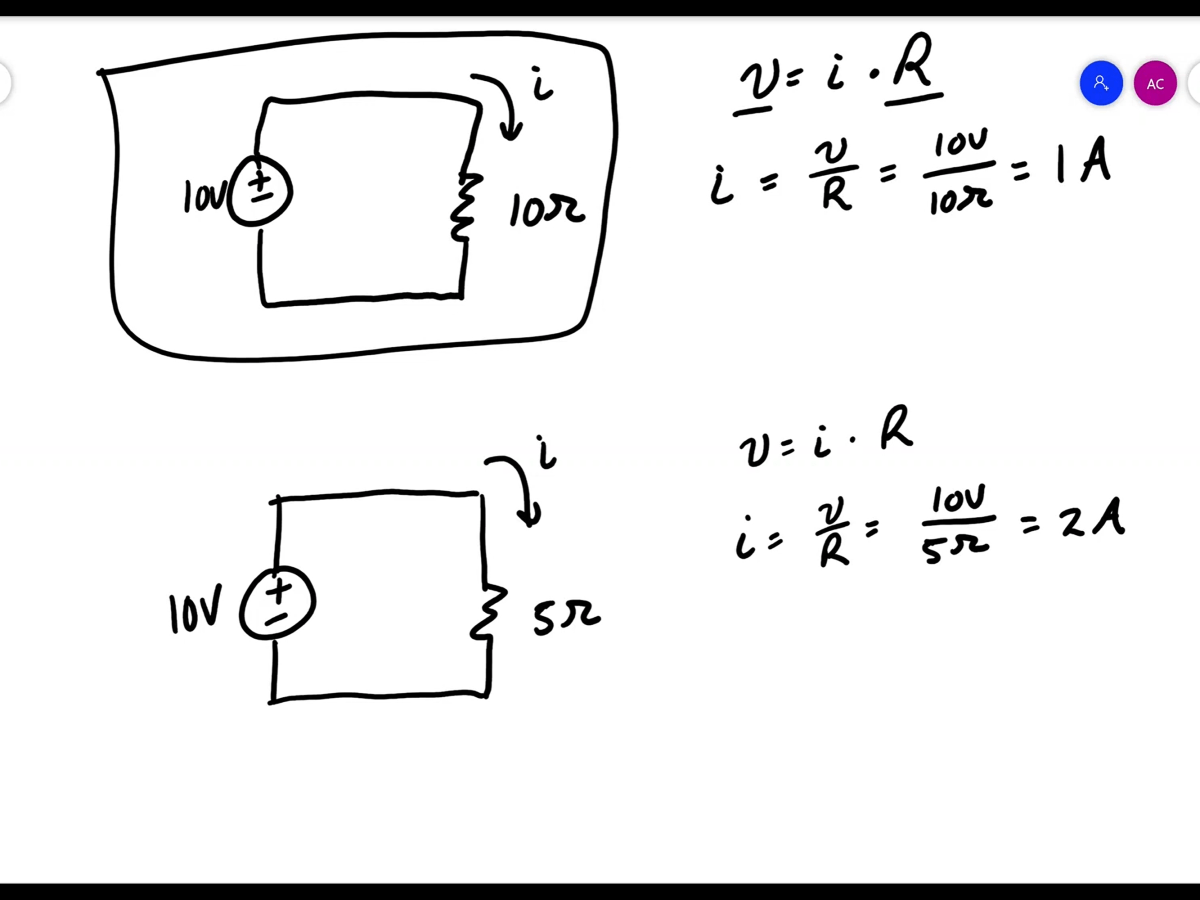
In this video, we will explore the most basic circuit element: the resistor. We define resistance, and discuss how it relates voltage and current. In addition, we will also introduce ideal sources (voltage sources and current sources). Lastly, we will look at examples where we practice using Ohm’s Law to determine the value of voltage,…
Circuit Analysis Lecture 1: Definition of Voltage, Current, and Power
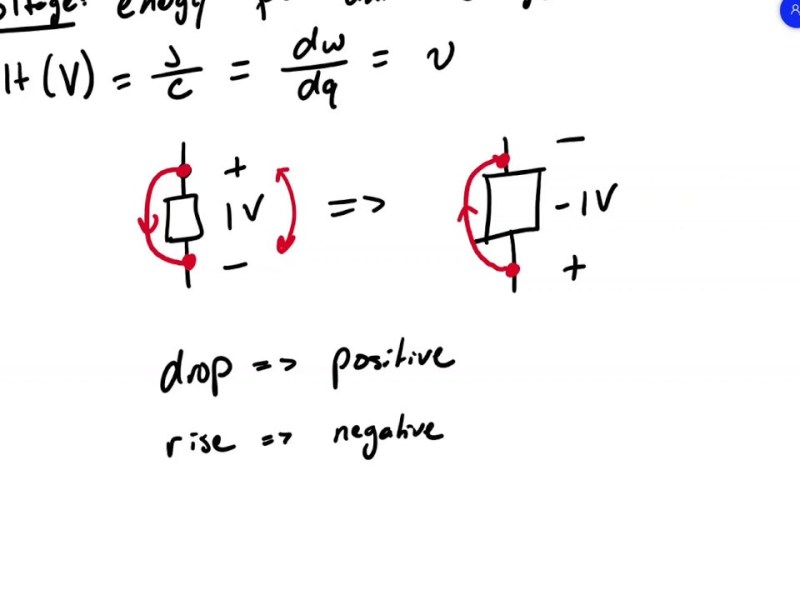
In this video, we look at the definition of voltage, current, and power from a qualitative and quantitative perspective. We use the water analogy to represent the flow of electrons as the flow of water molecules. Voltage can be thought of as a pressure difference between two sides of the same pipe. Current is similar…
 AXElectronic